
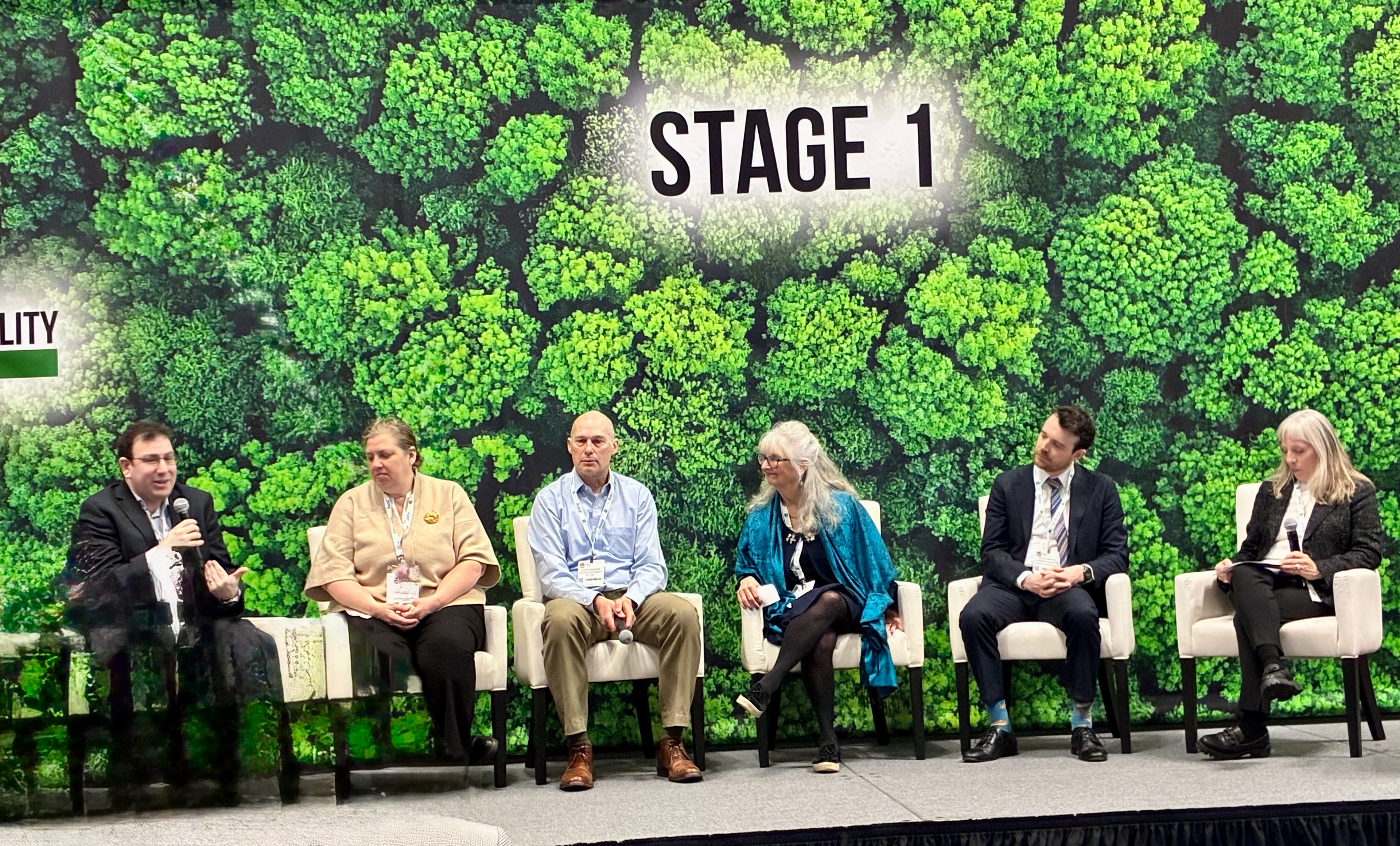
NY Build Expo 2026 Panel Discussion
PlaNYC: Getting Sustainability Done” How is it going?
PlaNYC: Getting Sustainability Done” How is it going?
April 8, 2026
A few weeks ago, I had the pleasure of attending the 2026 NY Build Expo at the Javits Center. It was an engaging experience marked by thoughtful discussions, innovative ideas, and encouraging momentum across the built environment sector.
A session that truly resonated with me was “PlaNYC: Getting Sustainability Done” How is it going?. It was moderated by Leslie Brunell, the Director Education at the Institute for Sustainable Infrastructure, and included panelists, Jackson Wandres, Director of Sustainability Coordination at NYC DDC, Bryan Simpson, PE, CEM, Chief Decarbonization Officer at NYC DCA, Deborah Howes, Director of Community Planning at AECOM, Eric Beaton, Deputy Commissioner for Transportation Planning and Management for NYC DOT, and lastly, Laura Popa, Deputy Commissioner for Sustainability for NYC DOB.
Per the panel discussion, PlaNYC, which was established in the mid-2000s, created a long-term framework for New York City's sustainability efforts, building on earlier initiatives for two decades.
Building emissions, which account for approximately 70% of the total, are being addressed through significant legislation:
- The 2009 Greater Greener Buildings Plan, which includes benchmarking and audits.
- Local Law 97 (2019), which mandates emissions caps for large buildings and has seen strong early compliance.
Sustainable infrastructure is progressing with the broader adoption of the Envision framework, which aims to standardize across all city projects. Key resiliency projects, such as flood mitigation systems, are a major focus. Additionally, embodied carbon is being addressed through Executive Order 23, which requires reporting of material impacts (EPDs) and is moving towards mandating low-carbon materials. Tools like EC3 support this transition.
Key Takeaways: NYC is evolving from tracking carbon to enforcing reductions and rethinking construction. PlaNYC has laid the groundwork, Local Law 97 is driving accountability, and Executive Order 23 is bringing embodied carbon into focus. The next challenge lies in scaling resiliency and securing necessary funding.